Polyurethane Mortar: The Ultimate High-Performance Concrete Protector
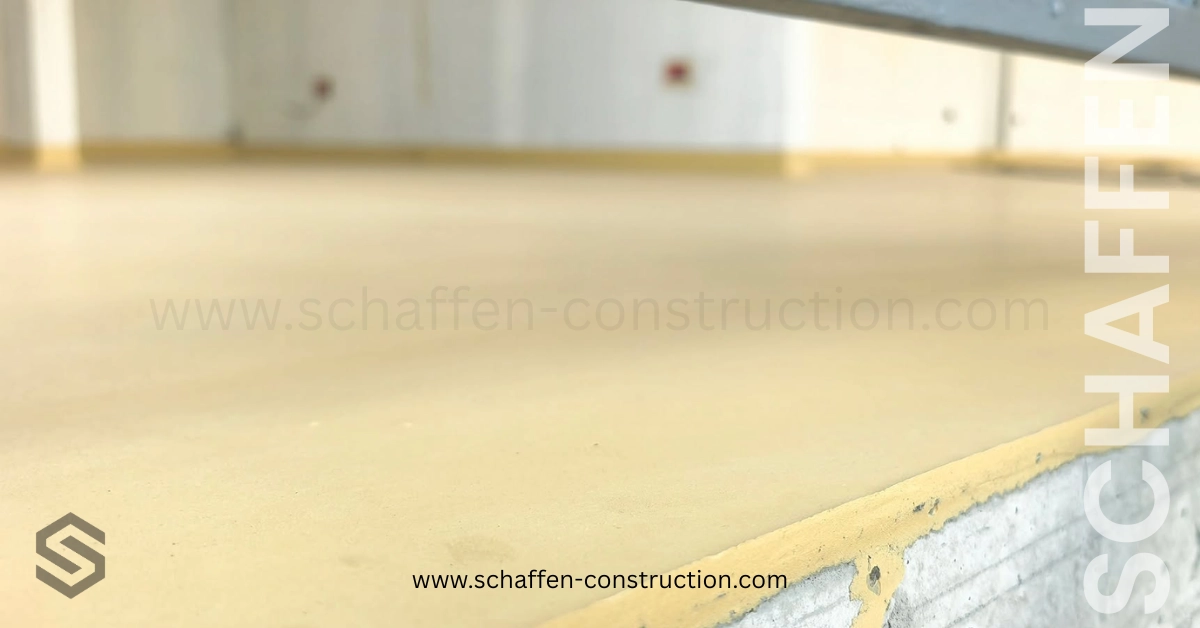
Polyurethane mortar can be used on concrete floors. In the Philippines, concrete is the backbone of modern industrial and commercial infrastructure. However, despite its immense compressive strength, bare concrete is inherently porous and vulnerable to chemical attacks, thermal shock, and heavy impact. To protect this investment, many industries in the Philippines rely on high-performance resinous flooring.
Among the most robust solutions available today for industrial settings is polyurethane mortar (often referred to as polyurethane screed, urethane concrete, or PU mortar).
Can it be used directly on concrete? The short answer is yes—in fact, concrete is the primary substrate polyurethane mortar was engineered to protect.
This article explores the relationship between polyurethane mortar and concrete substrates, examining how they bond, where this system is most effective, and the critical installation steps required for a flawless, long-lasting finish.
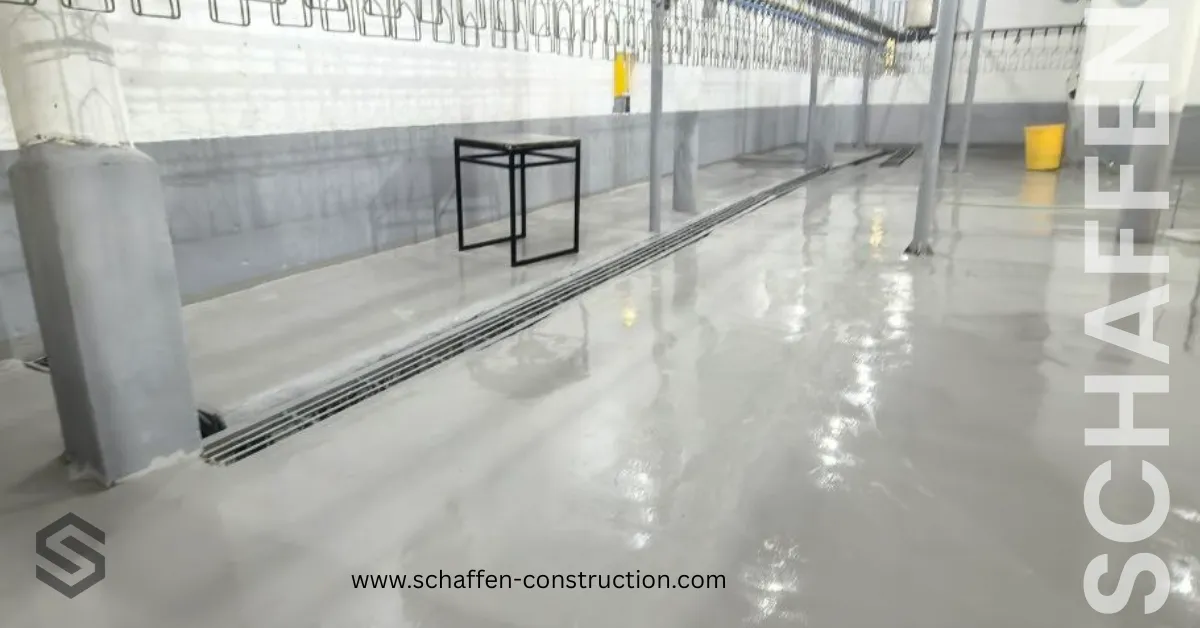
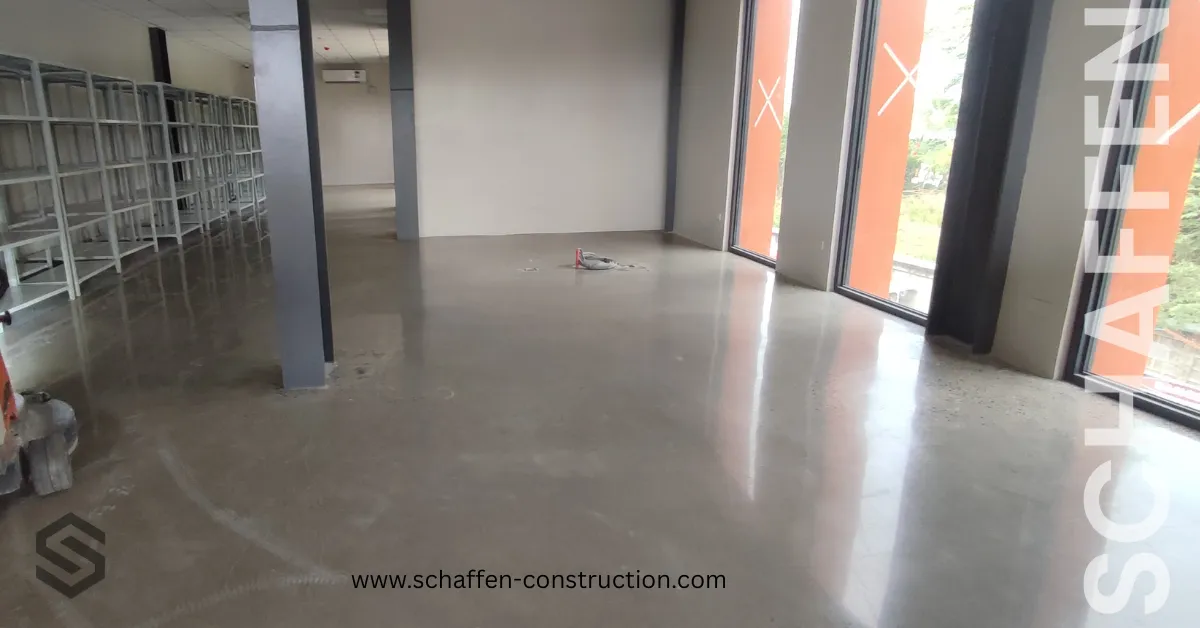
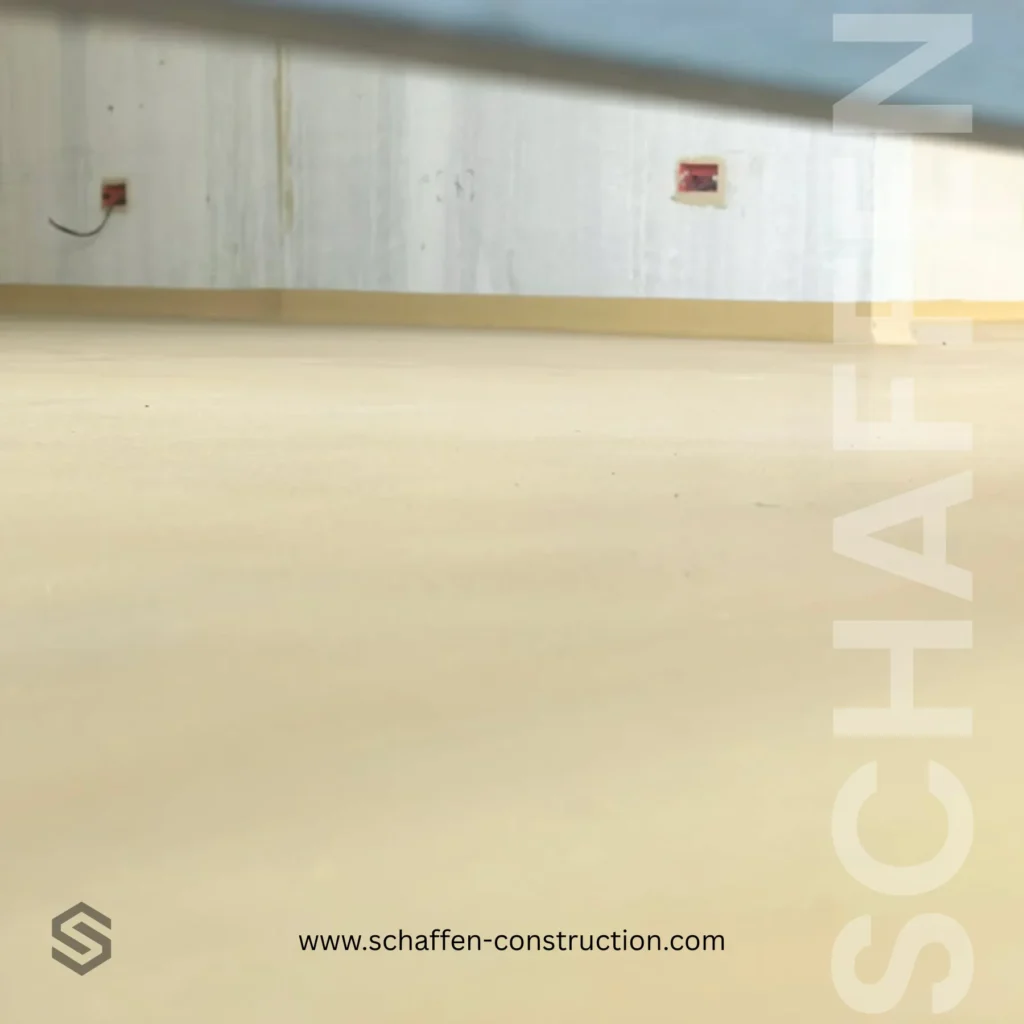
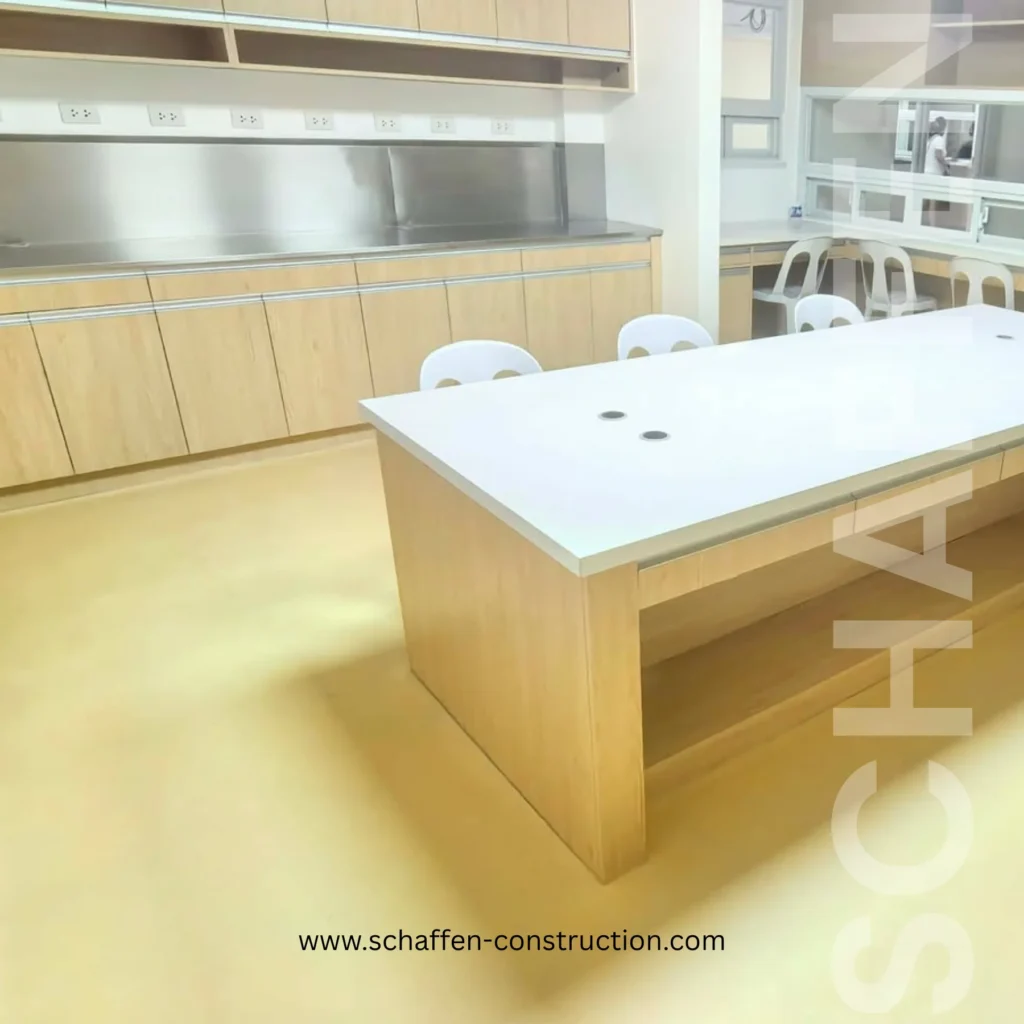
Before we proceed, these two images show PU Mortar applied on top of a well-prepared concrete slab. The left image is for a food processing center, while the right image is for a medical laboratory.
Understanding Polyurethane Mortar
To understand why polyurethane mortar works so well on concrete, it helps to understand what it is. Unlike standard polyurethane coatings, which are thin-film applications, a polyurethane mortar is a heavy-duty, cementitious aggregate system. It typically consists of a three- or four-part blend:
-
Part A: Polyurethane resin
-
Part B: Isocyanate hardener
-
Part C: Engineered aggregates, Portland cement, and pigments
-
Part D: (Optional) Liquid pigment packs
When mixed, these components form a thick, trowel-applied slurry or screed ranging from 3mm to 9mm (1/8″ to 3/8″) in thickness. The addition of cement and aggregates gives the material physical properties remarkably similar to concrete itself, which is the secret to its success.
Why Polyurethane Mortar and Concrete Are a Perfect Match
When applied to a properly prepared concrete slab, polyurethane mortar does not just sit on top of the surface; it cross-links and fuses with the substrate. Here is why they are highly compatible:
1. Thermal Co-efficient Match
One of the leading causes of resinous floor failure is delamination due to thermal shock. When hot water (e.g., during steam cleaning in a food plant) hits a floor, the topping and the concrete underneath expand. If they expand at vastly different rates, the bond breaks.
Because polyurethane mortar contains cementitious elements, its coefficient of thermal expansion is incredibly close to that of concrete. They expand and contract together, allowing the system to withstand extreme temperature swings ranging from -40 °C to over 120 °C without cracking or peeling.
2. Moisture Vapor Tolerance
Traditional epoxy coatings are notorious for failing when moisture vapor transmits through a concrete slab on grade. The vapor pressure builds up, causing the epoxy to blister and delaminate.
Polyurethane mortar is breathable. It allows small amounts of moisture vapor to pass through its crystalline structure without disrupting the chemical bond to the concrete. Many PU mortars can be applied to “green” concrete (concrete that has only cured for 7 to 14 days, provided it can withstand mechanical preparation) or slabs with high moisture vapor emission rates (MVER), saving massive amounts of project downtime.
3. Shared Compressive and Impact Strength
While concrete handles heavy static loads well, it can chip or crack under intense point loads or heavy impacts (like dropped tools or heavy metal pallets). Even polished concrete, with its excellent durability under daily foot traffic, still produces small hairline cracks on its surface. Polyurethane mortar acts as a high-strength shield, absorbing impact energy and distributing the load evenly across the concrete substrate.
Ideal Applications for Polyurethane Mortar on Concrete
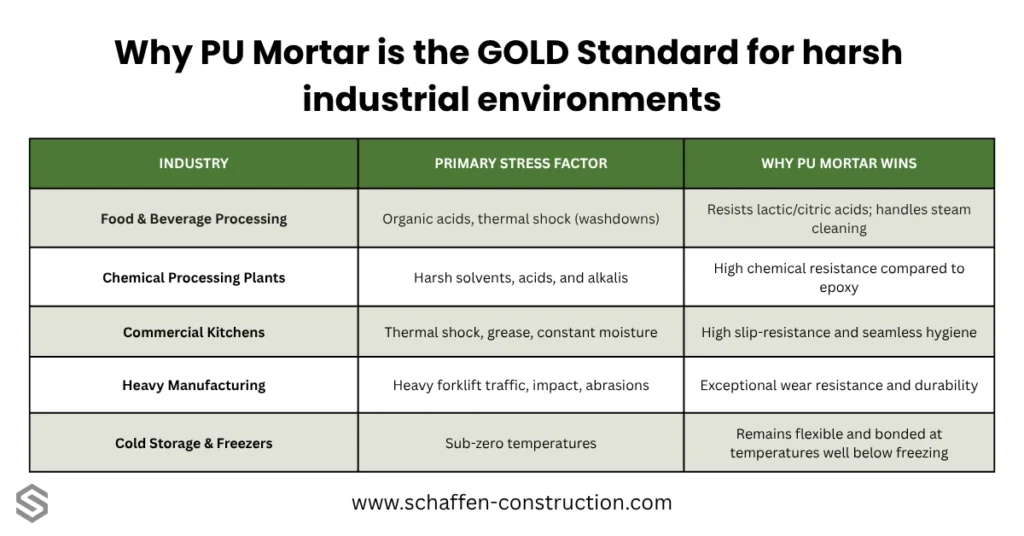
Because of its extreme durability, this flooring system is rarely used in residential spaces. Instead, it is the gold standard for harsh industrial environments. Check this table on why PU Mortar is the best flooring option for many industrial settings.
Crucial Steps for Applying Polyurethane Mortar to Concrete
While PU mortar is incredibly tough, its success is entirely dependent on installation. It is unforgiving of poor surface preparation. To ensure a permanent bond, installers must follow strict protocols.
1. Assessment of the Concrete Substrate
Before any material is mixed, the concrete must be evaluated:
-
Compressive Strength: The concrete should have a minimum compressive strength of 25 MPa (3,600 PSI) and a tensile pull-off strength of at least 1.5 MPa.
-
Contaminants: The slab must be completely free of oil, grease, old curing compounds, paint, and weak laitance.
2. Mechanical Surface Preparation
Chemical etching with acid is not sufficient for heavy-duty polyurethane mortars. The concrete must be mechanically profiled using shot-blasting or heavy diamond grinding to achieve an International Concrete Repair Institute (ICRI) Concrete Surface Profile (CSP) of 3 to 6. The resulting texture should feel rough, similar to coarse sandpaper, providing the mortar with a mechanical “tooth” to lock into.
3. Cutting Anchor Grooves
This is a critical, often overlooked step. Polyurethane mortars undergo slight shrinkage stresses as they cure. To prevent the edges from curling and lifting away from the concrete, termination grooves (retaining slots) must be saw-cut into the concrete.
These grooves are typically twice as deep and wide as the application thickness (e.g., a 6mm deep groove for a 3mm floor) and are cut around all perimeters, drains, doorways, and columns. The mortar fills these slots, effectively locking itself mechanically into the slab.
4. Priming (If Required)
While some PU mortars are self-priming, many manufacturers recommend a specific polyurethane or moisture-tolerant epoxy primer to seal the concrete pores, prevent pinholing (outgassing) from rising temperatures, and ensure uniform adhesion.
5. Mixing and Trowel Application
Polyurethane mortar sets rapidly—often within 15 to 20 minutes of mixing. It requires a skilled crew to blend the components precisely, rake the slurry to the appropriate thickness, loop-roll it to release trapped air, and hand-trowel or power-trowel the finish before the material begins to gel.
Polyurethane Mortar vs. Epoxy Mortar: A Quick Comparison
When deciding what to put over concrete, engineers often choose between epoxy and polyurethane mortars.
-
Concrete Epoxies are exceptionally hard and have excellent compressive strength, making them great for dry, heavy-traffic warehouses. However, they are brittle, prone to thermal shock failure, and easily damaged by organic acids (like lactic acid in dairy plants).
-
Polyurethane Mortars offer superior flexibility, thermal shock resistance, chemical resistance, and moisture tolerance, making them the superior choice for wet, chemically aggressive, or temperature-extreme environments.
CONCLUSION: PU MORTAR CAN BE USED ON CONCRETE FLOORS
Polyurethane mortar can absolutely be used on concrete—in fact, it represents the pinnacle of concrete protection technology. By matching the thermal characteristics of concrete while layering on top-tier chemical, thermal, and impact resistance, PU mortar transforms vulnerable slabs into nearly indestructible industrial surfaces.
However, because the material cures rapidly and demands aggressive mechanical surface profiling and anchor grooves, installation should always be left to certified, experienced commercial flooring professionals. When applied correctly, a polyurethane mortar system will comfortably protect a concrete slab for 10 to 20+ years under the harshest conditions imaginable. If you want to know about the price of PU Mortar flooring here in the Philippines, check this article.
Do you need PU Mortar Flooring?
Schaffen Construction Corp., has extensive experience with placing PU Mortar Flooring in the Philippines. Let's discuss your project.
CALL NOW