A Basic Guide to Pouring Concrete and Concrete Flatworks in Mindanao
The quality of pouring concrete for concrete flatworks is arguably one of the most critical, yet underappreciated, elements of modern construction in Mindanao. Encompassing any horizontal concrete pour — from residential driveways to sprawling industrial warehouse floors—flatwork forms the literal foundation upon which most environments built by humans operate.
While the structural framing of a building often commands the most architectural attention, the integrity of the concrete flatwork dictates the long-term functionality, safety, and aesthetic viability of the space.
This is especially true when pouring concrete for slabs-on-grade, walkways, and industrial flooring bases, where the quality of the initial concrete pour directly impacts the durability of subsequent floor coatings and architectural finishes.
Any industrial complex in Mindanao requiring concrete flatworks understand that whatever finish one decides for the concrete will depend a lot on the quality of the substrate.
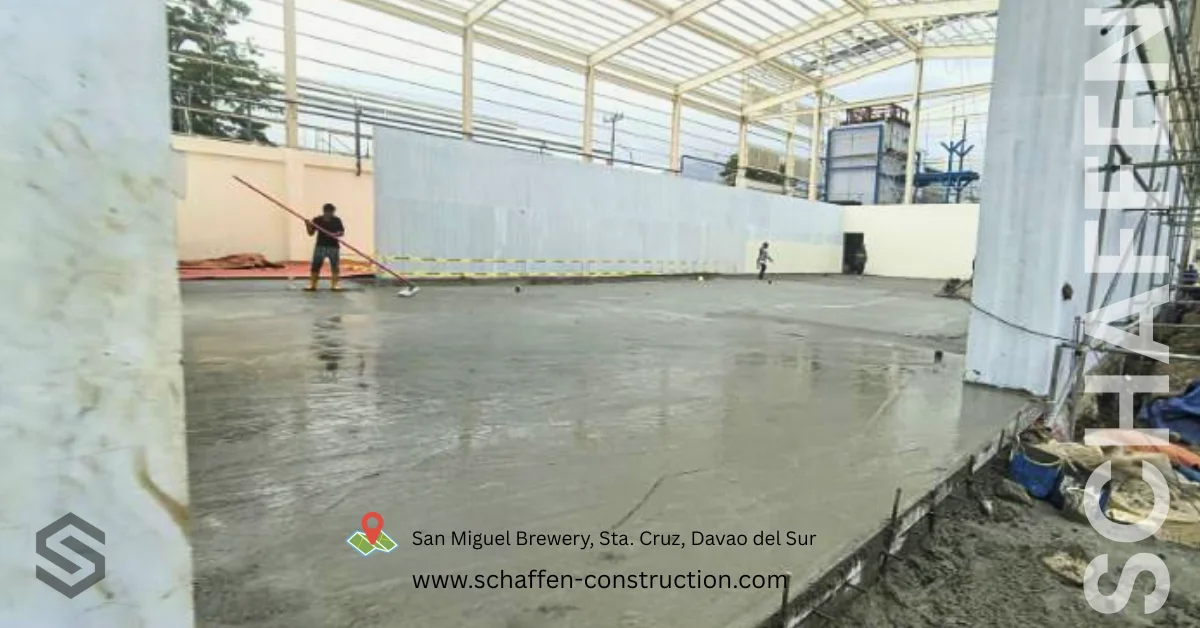
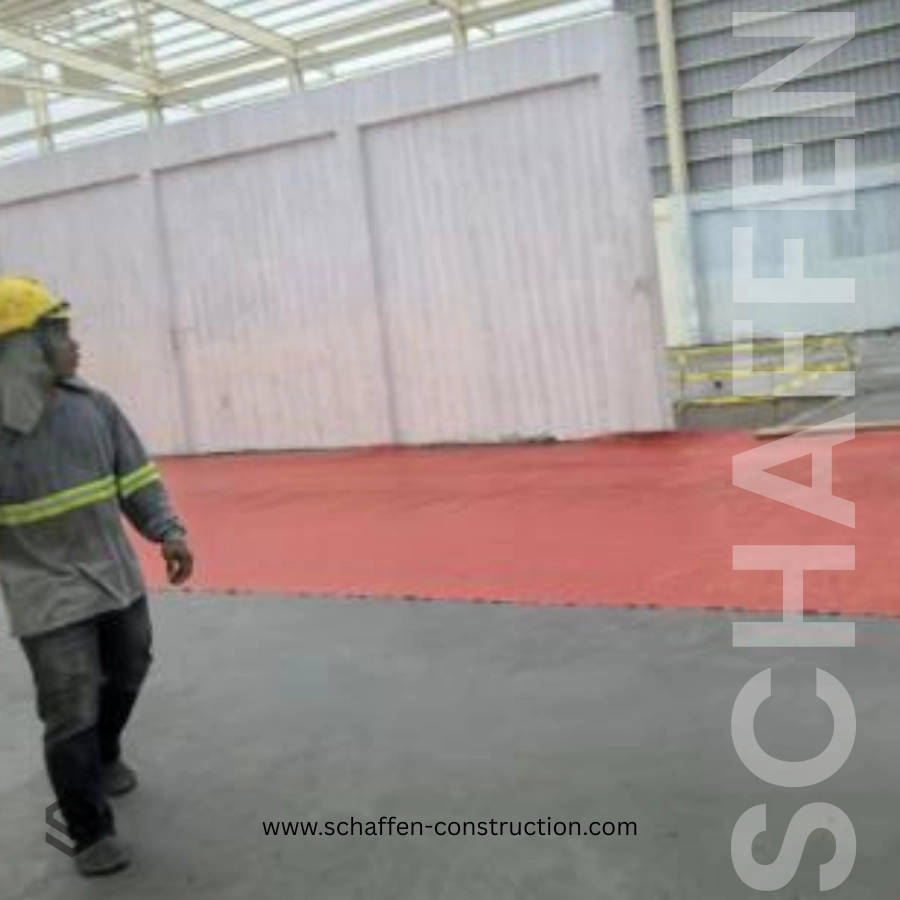
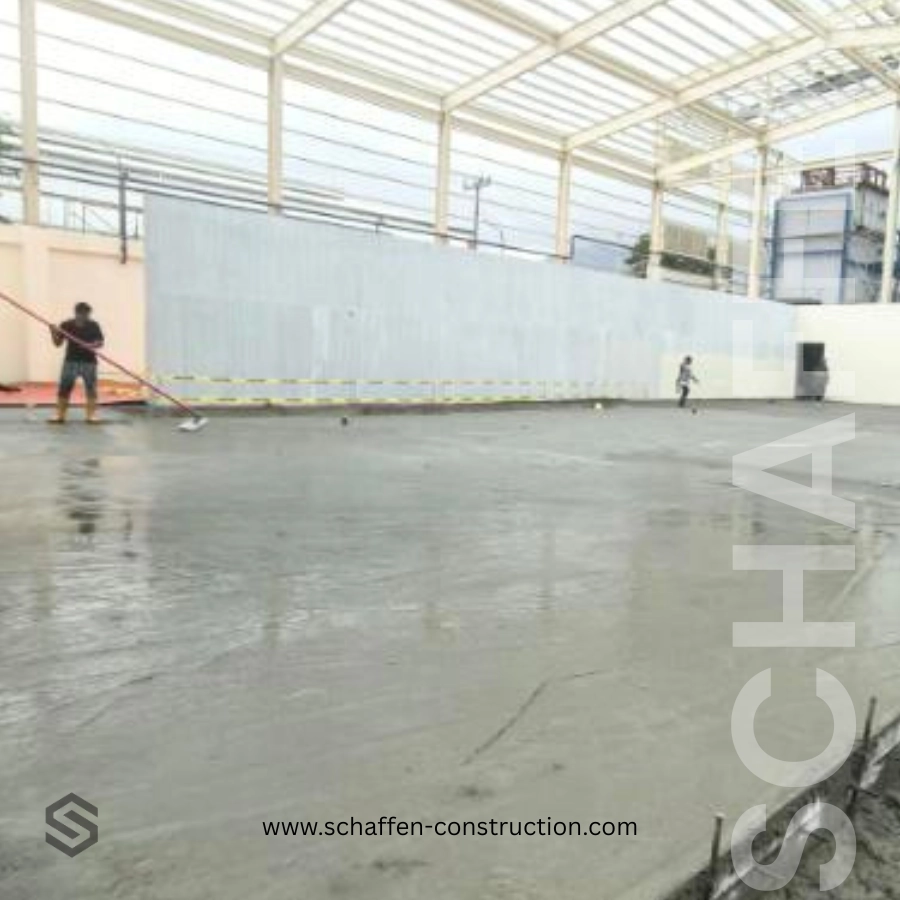
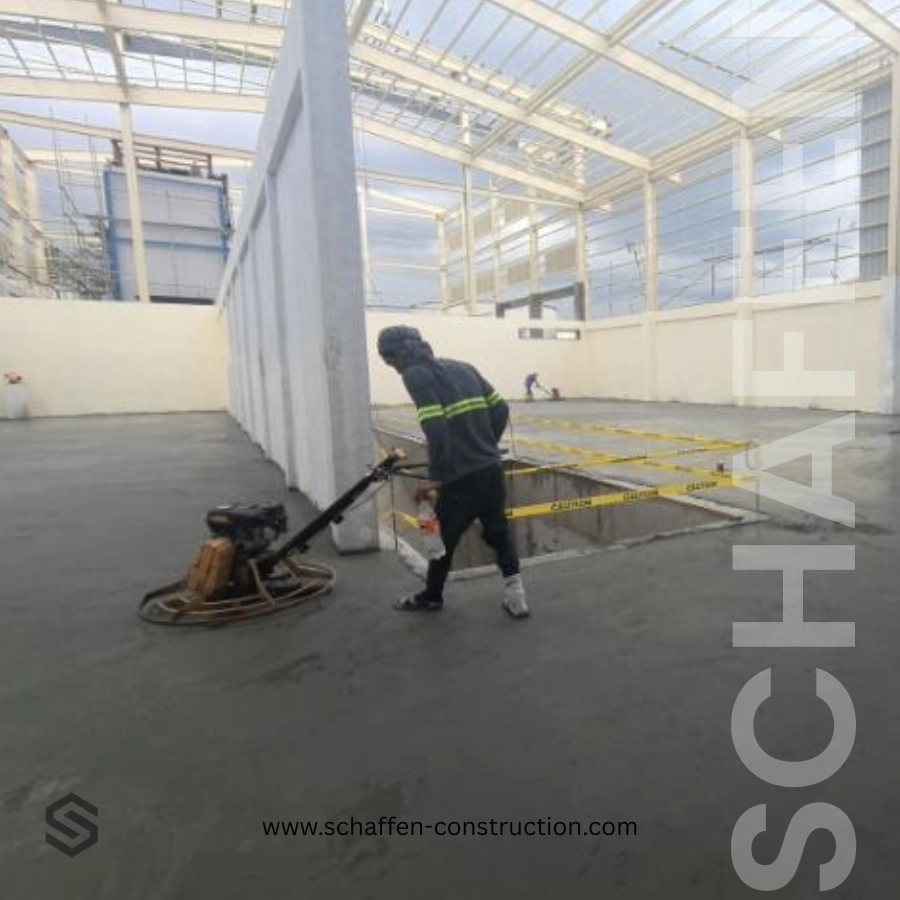
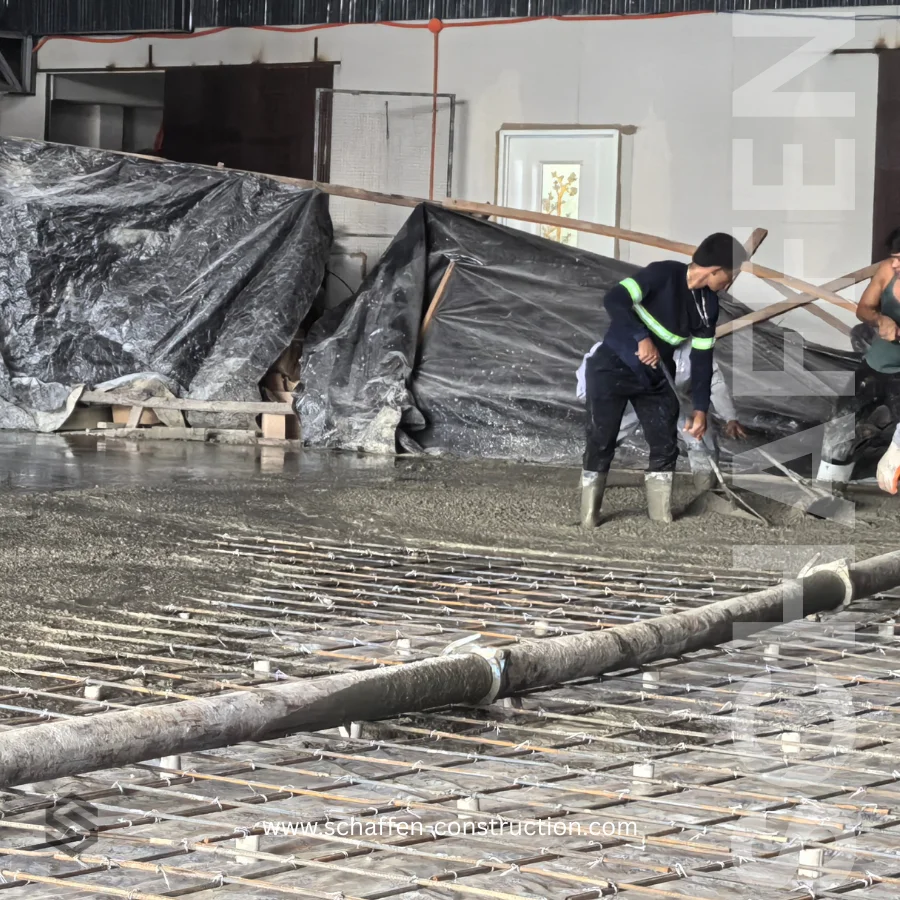
This client in Davao del Sur, for example, asked our concrete works team for help with the concrete floor or their brewery. Since the want their floor to be capable of handling the daily stress of foot and equipment traffic, we made sure our concrete pouring was top quality before any architectural or industrial finish is carried out.
Understanding Concrete Flatworks
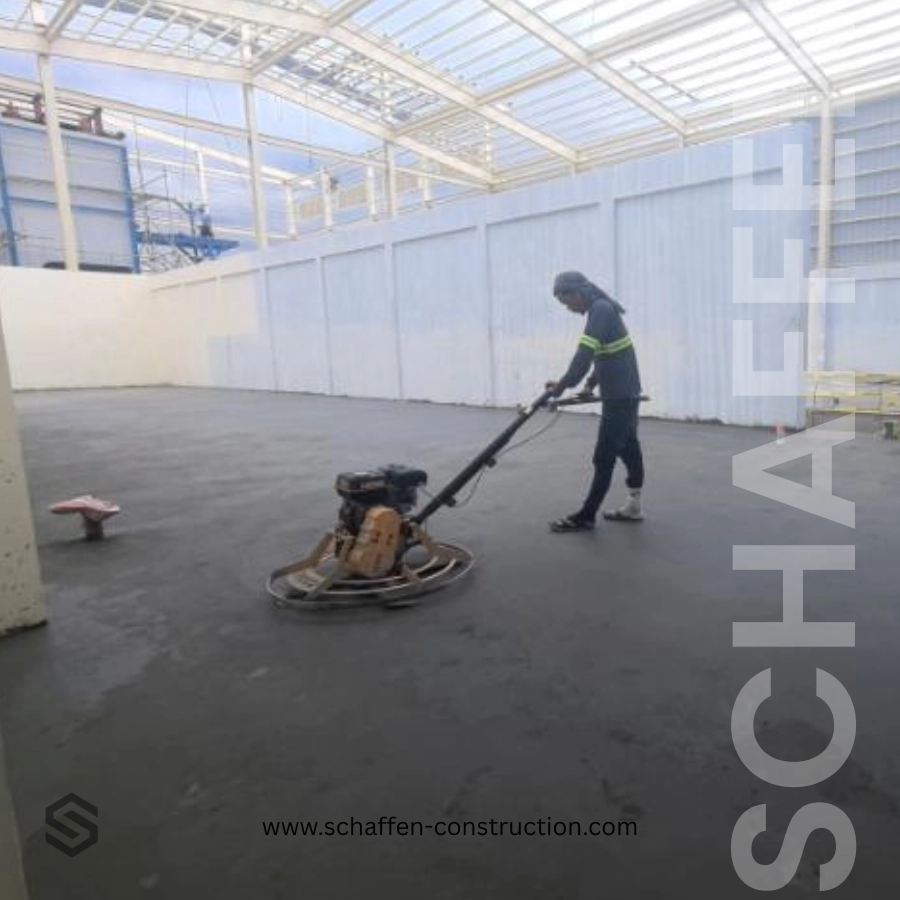
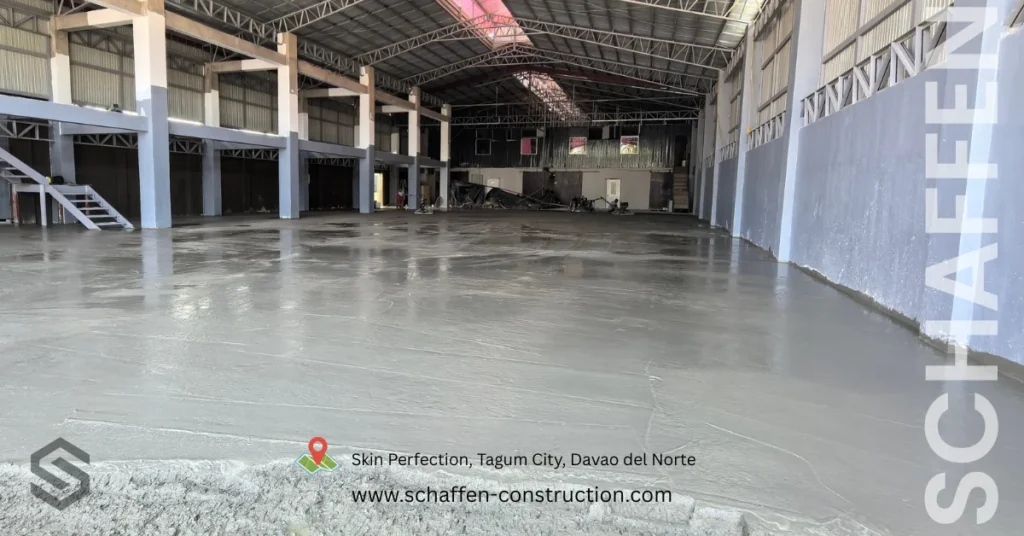
At its core, concrete flatwork involves the preparation, placement, and finishing of concrete along a horizontal plane. Here’s a wide-angle view of our concrete flatworks project with a cosmetics manufacturer in Davao del Norte.
Unlike vertical concrete walls or suspended slabs, concrete flatwork requires specific engineering to interact effectively with the underlying soil. The soil beneath the concrete must bear the combined load of the slab itself and everything placed upon it.
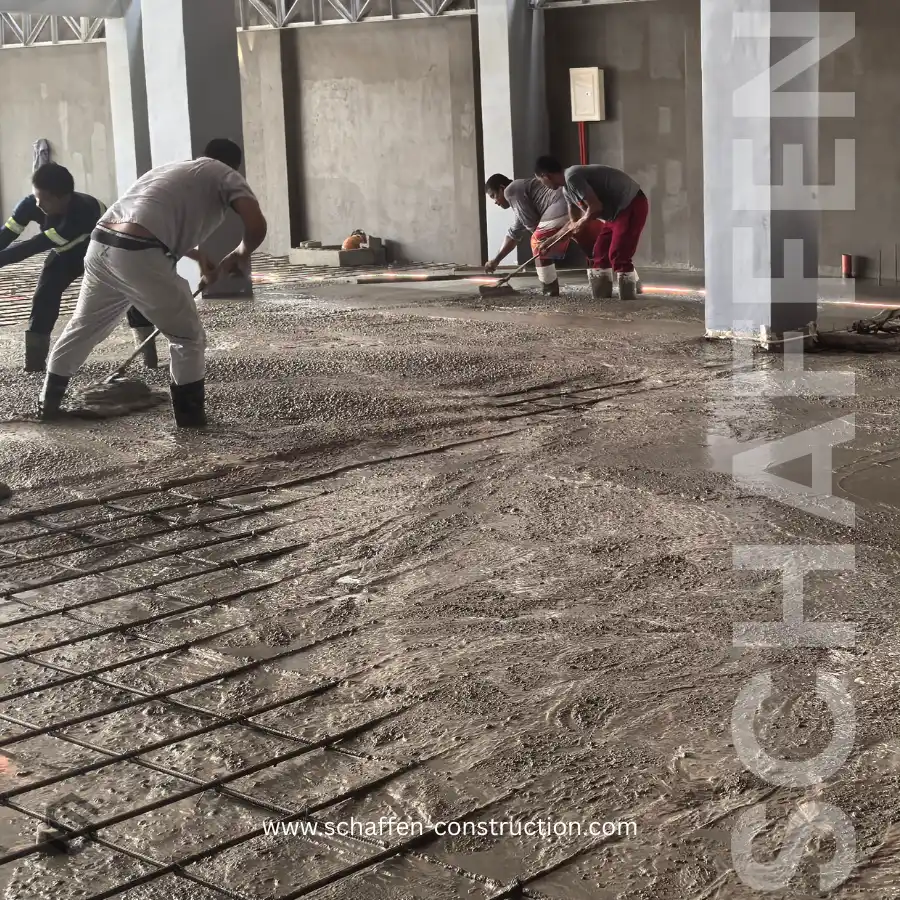
The slab-on-grade is the quintessential flatwork application, utilized in everything from residential basements to massive commercial footprints.
The success of a slab-on-grade begins long before the first cement truck arrives. It starts with the subgrade—the native soil upon which the slab will rest.
The subgrade must be rigorously compacted to prevent differential settlement, which is the leading cause of massive structural cracking.
Above the subgrade, a layer of granular base material (like crushed stone) is typically applied to provide a uniform bearing surface and to disrupt capillary moisture action.
Furthermore, an impermeable vapor barrier or vapor retarder is installed to prevent ground moisture from migrating upward into the slab. Reinforcement, whether through traditional steel rebar, welded wire mesh, or modern synthetic macro-fibers, is then placed to provide tensile strength, helping to hold the concrete together as it inevitably undergoes drying shrinkage.
In this sample project, our concrete flatworks teams ensured that pouring concrete was in line with standard quality materials and procedures, which included following the curing time needed for concrete slab mixtures.
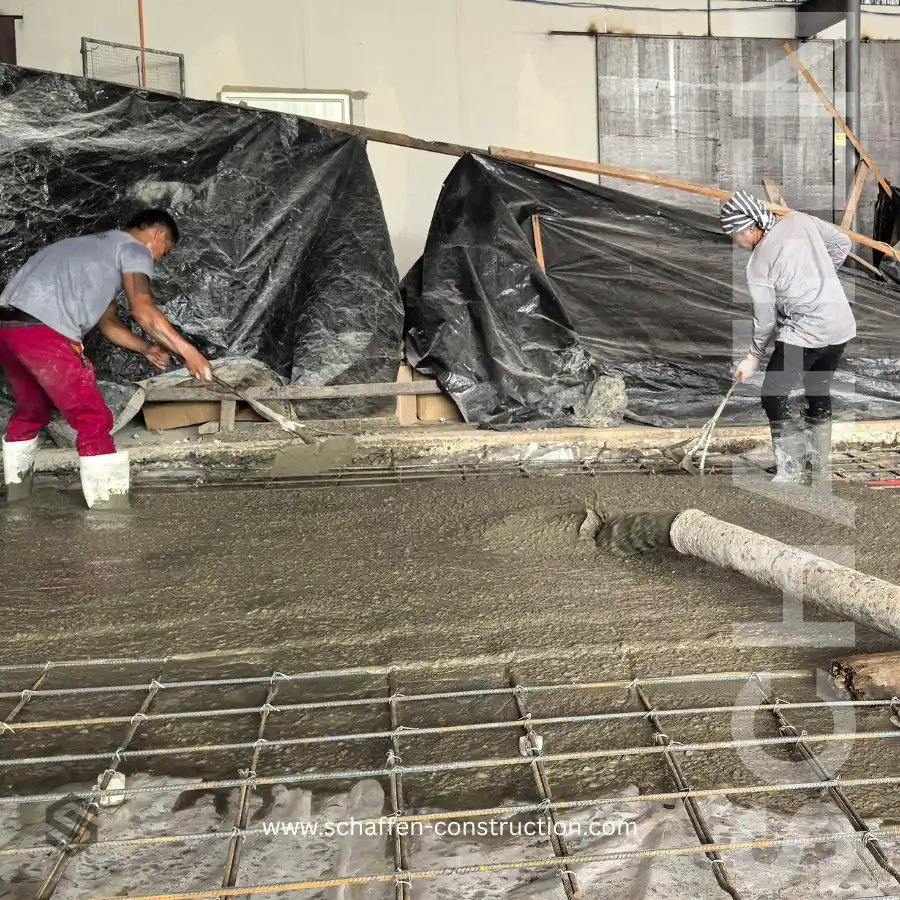
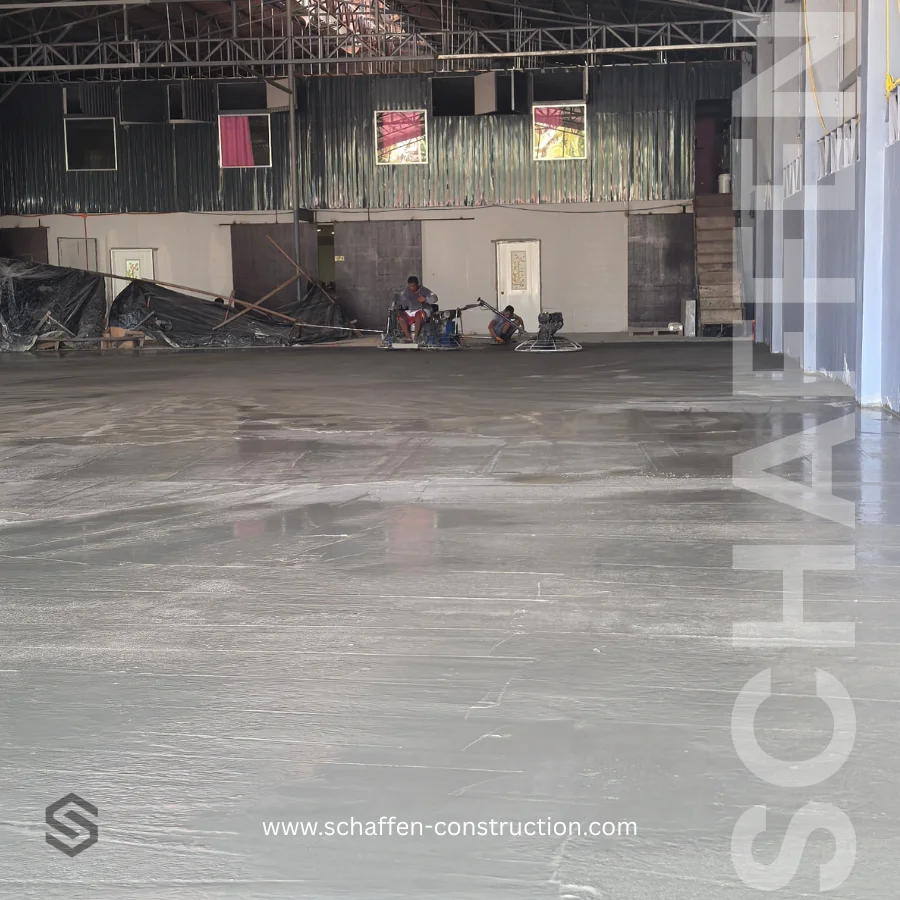
WALKWAYS AND PAVEMENTS
In Mindanao, walkways and exterior pavements present a unique set of challenges. Unlike interior slabs, exterior flatwork is subjected to the ravages of the natural environment in tropical areas: heat, moisture, direct ultraviolet radiation, and precipitation.
To combat these elements, the concrete mix design must often include air-entraining admixtures. These admixtures create microscopic air voids within the concrete matrix, providing space for water to expand when it drops in temperature, thereby preventing the surface from spalling or flaking.
Additionally, exterior walkways must be engineered for safety. Slopes must be meticulously calculated to ensure proper water drainage and prevent pooling, which can lead to ice formation or hydroplaning. The surface finish is also crucial; a light broom finish is standard practice to provide necessary slip resistance for pedestrian traffic, balancing safety with aesthetic appeal.
INDUSTRIAL FLOORING BASES
Industrial flooring bases represent the pinnacle of concrete flatwork engineering. These slabs must endure punishing conditions: heavy forklift traffic, extreme point loads from high-density storage racking, chemical spills, and heavy machinery vibration.
The concrete mix utilized for industrial bases often boasts a lower water-to-cement ratio to maximize compressive strength, sometimes exceeding 5,000 to 6,000 PSI (pounds per square inch).
In modern logistics and manufacturing facilities, floor flatness (FF) and floor levelness (FL) are critical metrics. Advanced material handling equipment, such as wire-guided turret trucks operating in narrow aisles, require extraordinarily flat floors to operate safely and efficiently.
Achieving high FF/FL numbers requires precision pouring, specialized screeding equipment (such as laser-guided screeds), and masterful finishing techniques and overall durability.
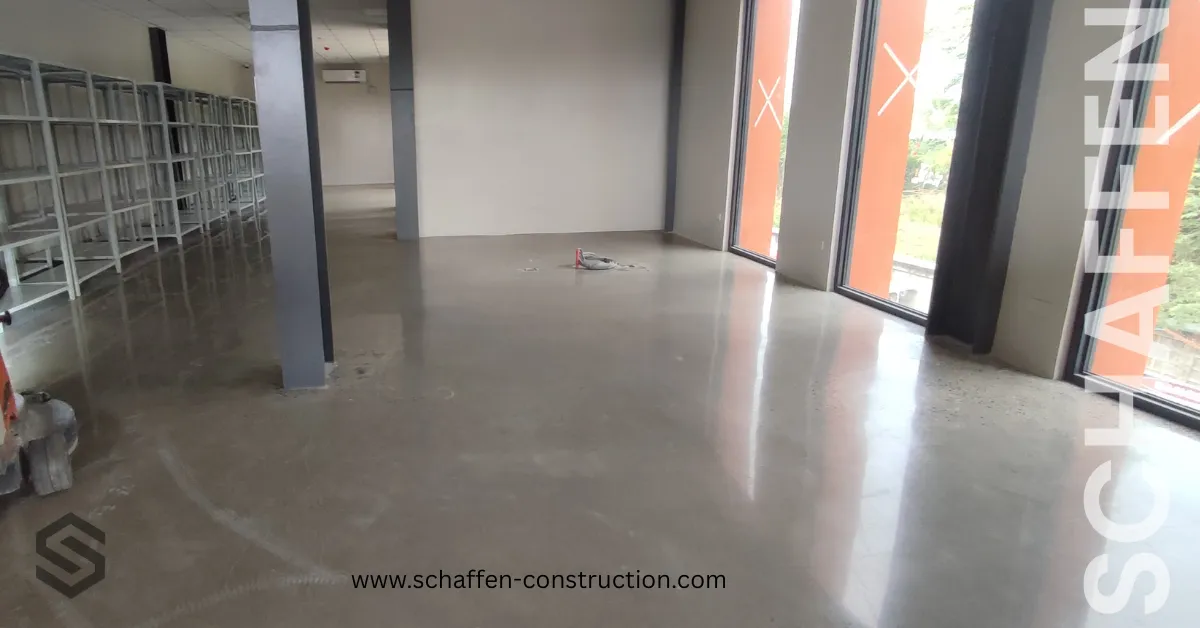
The correct concrete mix, process, and curing is crucial for any flooring that would be finished later on. In polished concrete, for example, the slab requires a hardness reading above 4000 PSI. Failure to achieve this will not yield favorable results.
You can check this article to learn more about polished concrete in the Philippines.
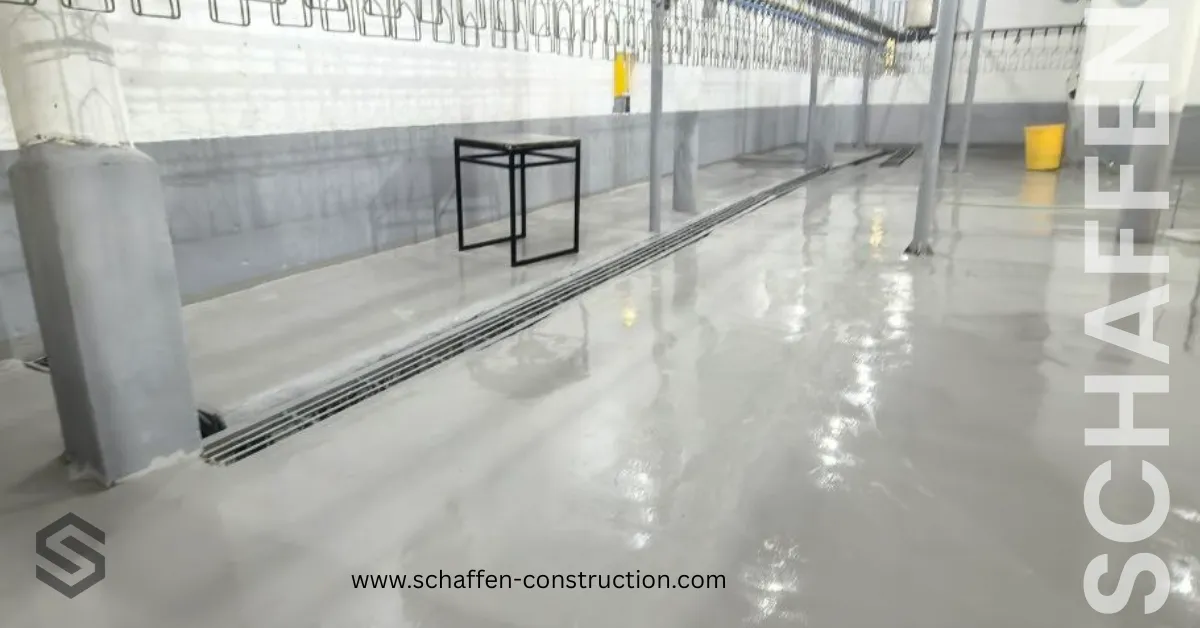
The same applies to other industrial flooring systems like PU Mortar and Industrial Epoxy. Both finishes require flat and durable substrates so that the outcome is high quality and durable. Once the concrete substrate beneath cracks, the surface would most likely crack and delaminate.
Here’s an important principle to remember: The integrity of a finished floor—whether polished concrete, microcement, epoxy, or tile—is entirely dependent on the quality of the concrete substrate underneath the finish.
A compromised substrate will inevitably lead to a compromised finish.
The Value of High-Quality Concrete Pouring
The processes of pouring, consolidating, and curing are where the scientific formulation of concrete meets the craftsmanship of the finisher. High-quality pouring is not merely about achieving a visually pleasing surface; it is about creating a dense, structurally sound matrix.
When concrete is placed, it must be properly consolidated to remove entrapped air pockets, known as “honeycombing,” which weaken the slab. As the concrete begins to set, finishers use bull floats, fresnos, and power trowels to push larger aggregates down and bring a fine layer of cement paste to the surface.
However, overworking the surface or adding excess water to make finishing easier can be disastrous. This leads to a weak, dusty surface layer known as laitance.
Proper curing is equally vital. Concrete does not “dry”; it cures through a chemical reaction called hydration, which requires moisture and time. If the surface dries too quickly, the hydration process halts prematurely, drastically reducing the surface strength of the slab and leading to extensive “craze” cracking.
Quality Concrete Pouring: Substrate Durability for Architectural Finishes
At Schaffen Corporation, we know that the most profound value of a high-quality concrete pour is realized when the slab serves as a substrate for floor coatings (like epoxies, polyurethanes, or polyaspartics) or architectural finishes (like large-format tiles, hardwood, or polished concrete).
Polyurethane (PU) mortar flooring, for instance, is capable of handling heavy equipment. But it can only perform well if the underlying substrate is highly durable.
The substrate is the foundation of the flooring system; if the foundation fails, the system fails.
Adhesion and Surface Integrity
High-performance resinous coatings require a strong, sound substrate to bond effectively. If a concrete slab was poured poorly and has a weak laitance layer, the epoxy will bond only to that weak layer. When subjected to traffic or stress, the laitance will shear away from the underlying concrete, causing the entire coating system to delaminate and peel.
High-quality pouring and finishing ensure a dense surface that, once properly mechanically profiled (e.g., via shotblasting or diamond grinding), provides an unyielding anchor for coatings.
Moisture Vapor Transmission (MVT):
One of the most common causes of flooring failure is excessive moisture vapor transmitting through the slab. This is often the result of failing to install a proper sub-slab vapor barrier or rushing the installation of non-breathable coatings before the concrete has adequately cured and naturally expelled its excess moisture.
Trapped moisture vapor creates immense hydrostatic pressure beneath coatings, eventually causing them to blister, bubble, and peel away. Proper flatwork planning mitigates this risk at the design phase.
Crack Mitigation:
All concrete cracks—it is a fundamental characteristic of the material’s drying shrinkage. However, high-quality flatwork controls this cracking. By employing the correct water-cement ratio, proper reinforcement, and meticulously timed saw-cut control joints, contractors force the concrete to crack in designated, straight lines.
If random, structural cracking occurs due to poor pouring practices, these cracks will inevitably “telegraph” or transfer up through brittle architectural finishes like ceramic tile or rigid epoxies, destroying the aesthetic and functional integrity of the floor.
CONCLUSION
Always make sure your concrete pouring process for any concrete flatwork project is top quality.
Based on available research, and our extensive experience with concrete here in Mindanao, and other parts of the Philippines, concrete flatwork is a complex interplay of material science, environmental management, and skilled labor.
Whether constructing a simple pedestrian walkway, a durable slab-on-grade, or an ultra-flat industrial base made from polished concrete, microcement, PU Mortar, or Industrial Epoxy, the precision of the pour and the diligence of the curing process cannot be overstated.
By investing in high-quality concrete practices, our engineers and team leaders always ensure that the resulting substrate for clients here in the Philippines is a resilient, reliable foundation capable of supporting heavy loads and ensuring the long-term success of high-performance floor coatings and architectural finishes.
In the world of construction, cutting corners on the ground level inevitably leads to failures at the surface.
Do you need Concrete Pouring Services?
Schaffen Construction Corp., has extensive experience with placing concrete flatworks in the Philippines. Let's discuss your project.
CALL NOW